

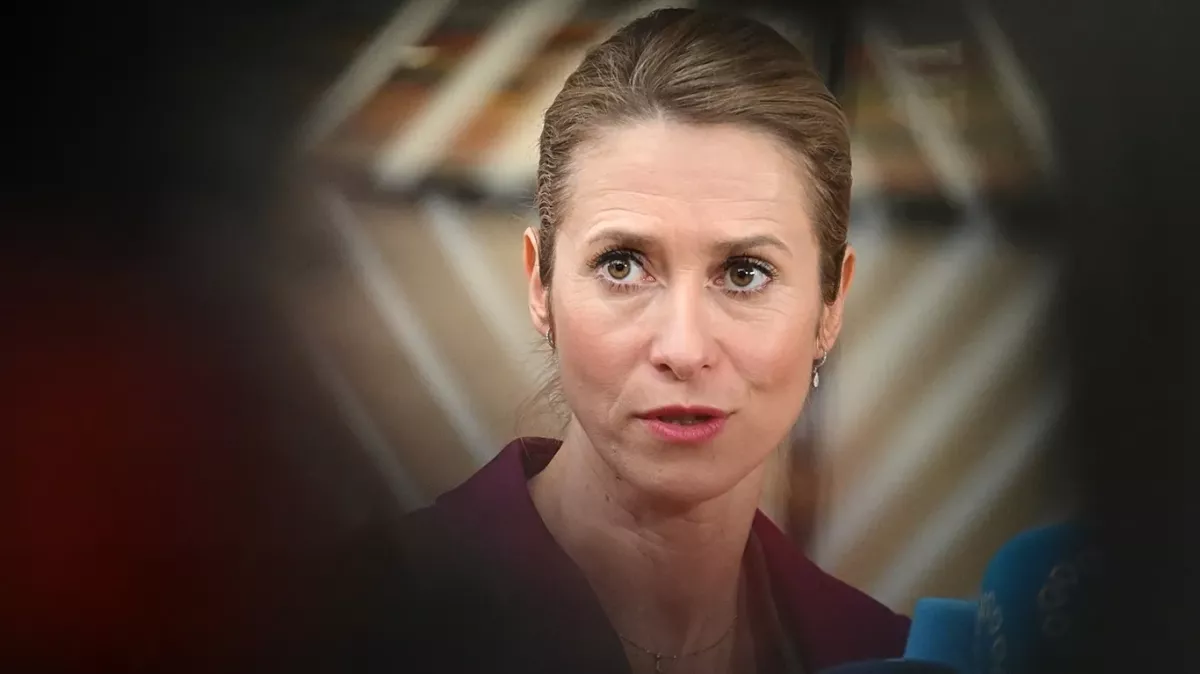
Rising criticism of European Union foreign policy chief Kaja Kallas has exposed deeper structural tensions within the EU’s external action system, according to diplomats and officials cited by Euronews.
Kallas, the EU High Representative for Foreign Affairs and Security Policy, has come under renewed scrutiny following the circulation of an informal document reportedly linked to the French government. The paper outlines several options for restructuring her role, including proposals that would significantly alter the balance of power within the EU’s foreign policy architecture.
One option would expand the High Representative’s portfolio to include trade and economic development. However, two alternative proposals would substantially reduce the position’s influence by transferring responsibilities either to the European Commission, led by Ursula von der Leyen, or back to EU member states.
“She does, unfortunately, a lot to lose support. She is not very good at building alliances in the Council,” a senior diplomat said. “But France is currently in all-attack mode against all institutions.”
The emergence of the document comes amid growing dissatisfaction among some EU officials with Kallas’s performance. Critics have pointed to her public remarks on China, her calls to use immobilised Russian assets to support Ukraine, strained relations with the US administration, and policy initiatives they say were advanced without sufficient consultation with member states.
Overall, critics argue that Kallas continues to operate in a style more reminiscent of her former role as Estonia’s outspoken prime minister, advancing positions that sometimes exceed the consensus agreed by the EU’s 27 member states.
“The EEAS and the position of High Representative were created in a different time and age, when the world looked completely different. If you were to create the system from scratch, you wouldn't do it now the way it was done then,” another senior diplomat said.
Analysts note that the European External Action Service (EEAS) occupies a complex institutional position, simultaneously linked to the European Commission while also tasked with producing independent foreign policy proposals. However, its ability to implement decisions is constrained, as EU foreign policy requires unanimous agreement among member states, giving any single country the power to block action.
By Sabina Mammadli
Source: caliber.az


 scorpion.az