


Russia’s Federal Security Service (FSB) has warned of potential Western cyber threats against Iran, with its director, Alexander Bortnikov, citing recent developments as a “warning signal.”
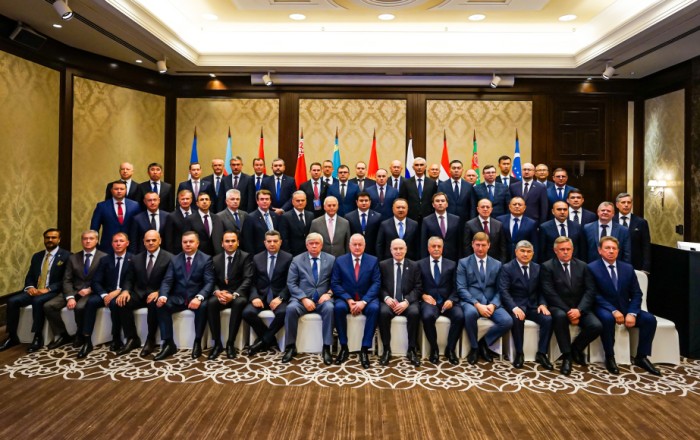
Speaking at a meeting of the Council of Heads of Security Agencies and Special Services (SORB) of Commonwealth of Independent States (CIS) member states, Bortnikov pointed to what he described as the “recent liquidation” of senior Iranian officials by a US-Israeli alliance. According to him, sensitive location data was obtained through cyber means.
“A clear warning signal is the recent liquidation by the US-Israeli alliance of representatives of Iran’s top leadership. The coordinates of the victims’ locations were obtained, among other things, through software backdoors in video monitoring systems in Tehran,” Bortnikov said.
He argued that reliance on Western technology platforms creates systemic vulnerabilities, stating that such dependence “creates significant vulnerabilities to cyberattacks by the intelligence services of leading NATO countries and their allies.”
Bortnikov also raised concerns about the potential use of militants as proxy forces in a conflict involving Iran. He said individuals linked to extremist groups in Syria, including nationals of CIS countries, could be recruited for such roles.
“According to available data, Western intelligence services do not abandon attempts to use terrorist militants from Syria as a ‘proxy force’ in a war with Iran. Among them are natives of CIS countries who fought as part of the ‘Islamic State’ and other terrorist groups, and later ended up in Syrian prisons,” he said.
According to Bortnikov, these individuals are being transferred to Iraq and placed in specialized camps. He warned that such fighters could later be deployed not only in the Middle East but also in their countries of origin.
“It is obvious that such agent-militants can and will be used not only in the Middle East, but also in their countries of origin. At one time, the history of IS began from similar Iraqi prison complexes that were under the supervision of the intelligence services of the Western coalition,” Bortnikov noted.
He added that this earlier period saw a marked rise in supporters of jihadist ideology across CIS countries.
“Against the backdrop of the current Iranian crisis, this trend may intensify, and the source of the threat will be located in close proximity to the southern borders of the CIS,” Bortnikov warned.
By Tamilla Hasanova
Source: caliber.az








 scorpion.az