

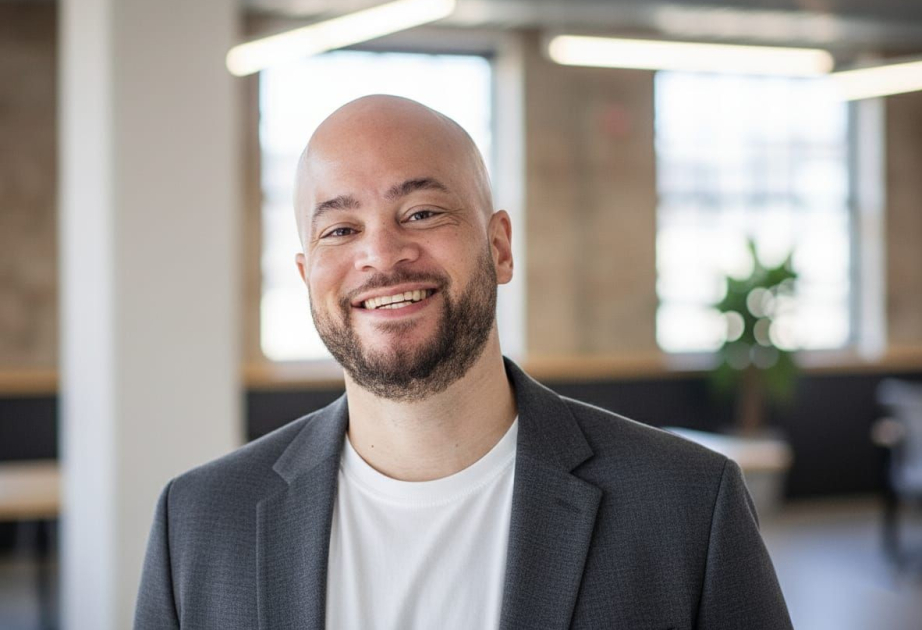
Baku, November 15, Tamilla Mammadova, AZERTAC
Azerbaijan is actively pursuing the digital transformation of its economy, striving to become a key player in modern areas such as fintech, blockchain, artificial intelligence, and decentralized finance. In this regard, leveraging international expertise and collaborating with leaders in innovation and technology is an important step.
AZERTAC presents an exclusive interview with Giovanni Everduin, an expert in strategy and innovation, Chief Strategy and Innovation Officer, co-founder of CBIx, and a leading specialist in integrating artificial intelligence and decentralized finance into traditional financial systems.
- Mr. Everduin, please tell us a little about your professional journey. How did you come to the role of Chief Strategy & Innovation Officer and Head of Ventures?
- I have what you would consider a highly non-linear career. I’ve always followed my instincts, without a clear plan or path to where I wanted to end up. Opportunities always came along and if they made sense intuitively, I would seize them wherever they would lead. I started out as a political analyst working in Mexico City, then pivoted in Business Process Outsourcing (BPO) in 2006 when that market was taking off.
I joined Accenture to lead part of the largest HR Transformation and Outsourcing deals for Unilever. From BPO I rolled into management consulting, where I worked with many Fortune 500 companies, including 3 of the top 10 banks in the world.
In 2011, I ended up in Dubai to help set up and scale Tanfeeth, the region’s first outsourcing and transformation company, fully owned by Emirates NBD, a leading Middle Eastern bank. After scaling from startup to 3,000 FTE over a 3 year period and making the Tanfeeth story into a Harvard Business School case study, I left behind my role as Chief People Officer and joined CBI where, after supporting the CEO with a large scale turnaround and transformation, and serving as interim Chief HR Officer, I ended up as the Chief Strategy & Innovation Officer with a mandate to prepare the bank for the future of finance and build out alternative revenue streams.
-You often position yourself as a "bridge" between Web2 and Web3. What does this mean in practice, and how do you envision the future of this interaction?
- With the current rapid, disruptive pace of technological innovation and subsequent societal changes, I think we increasingly see divides wherever we look. Web2 vs web3 (and whatever will come next!), institutional vs entrepreneurial, centralized vs decentralized, human vs AI or in general - old vs new - all of these are divides, opposing sides to a dynamic reality in need of bridges and translators. Neither one by themselves is inherently good or bad, but you’ll need to understand both to be successful.
For me, the future is hybrid, and it will belong to people that can walk across multiple dimensions. I’m an institutional banker, with the risk appetite of a VC and the working style of a startup founder. I grow up in Western culture, with Carribean / South American roots, and spent the last 15 years of my life working in the Middle East. I’m fluently cross cultural with a natural curiosity to learning new things. Nature and nurture wired me to connect different contexts and perspectives. That’s how I build bridges.
- Azerbaijan is actively working on the digital transformation of its economy, including the implementation of blockchain, AI, and DeFi technologies. In your opinion, where should countries actively developing these areas begin?
- Begin by nurturing, enabling and driving innovation. This requires an ecosystem approach, you’ll need academic institutions that sparks ideas, develops talent and founders. You’ll need a venture capital / investor community that provides the capital needed for these startups to build, grow and scale. And you’ll need a supportive government that stimulates this ecosystem through progressive economic policies and regulations - walking a fine line between protecting consumer interest and enabling innovation.
There are plenty of great examples to learn from, countries like the UAE and Singapore are a great playbook of inspiration and more recently and closer to home places like Kazakhstan with their digital government and Tajikistan with their AI capabilities are great references.
- How do you assess Azerbaijan's potential as a regional hub for fintech, Web3, and AI amid geopolitical and economic changes in Eurasia?
- I see enormous potential. As a nation, there already is great existing infrastructure, including the capability to host a highly complex logistical event like the F1.
The country literally sits at the crossroads between Europe, Central Asia and the Middle East and you have a strong government ambition to build a vibrant startup ecosystem.
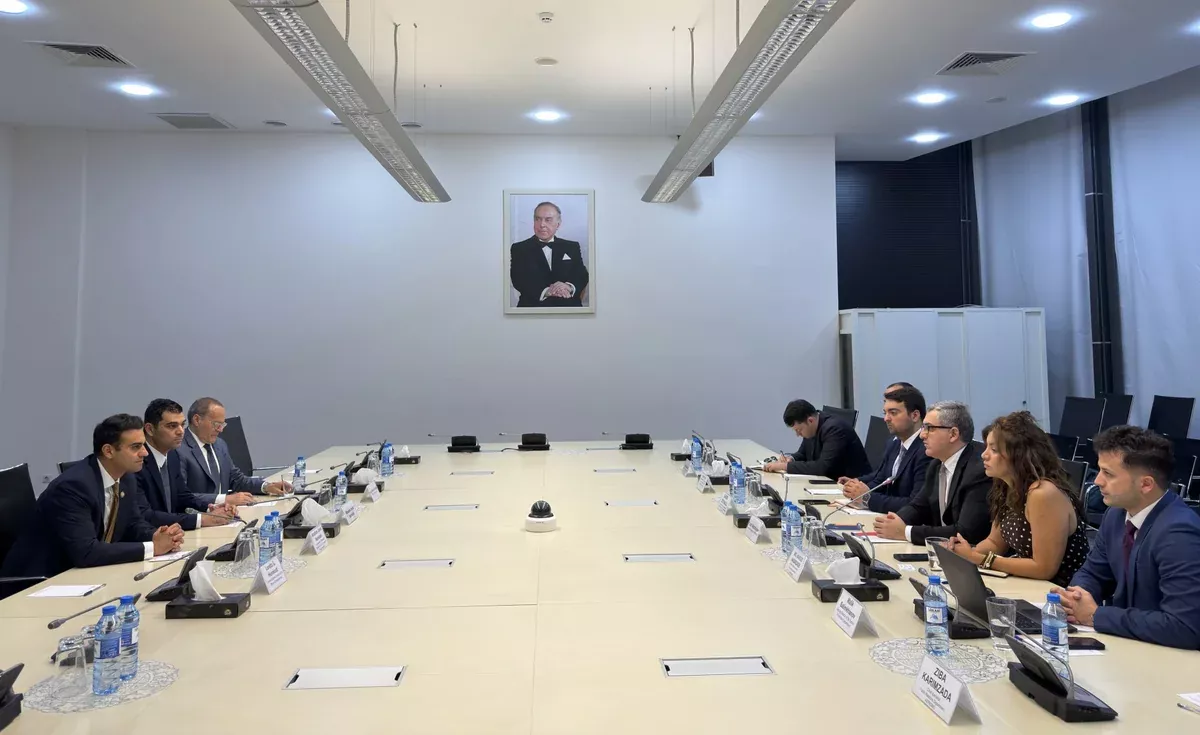
The InMerge Summit has become one of my favorite innovation conferences in the world, highly curated and with meaningful conversations and a strong demand for learning and exposure. My good friend Aslan, CEO of Whitehill Capital, recently signed a strategic partnership with the Innovation and Digital Development Agency to establish a new venture financing company in Azerbaijan to help fund innovation, build out a venture capital network and scale local startups across and beyond the region.
I served on a UN working group on Regional Collaboration in the Development and Governance of AI, led by Tajikistan, where we highlighted the tremendous opportunities for emerging markets across Central Asia - and I think Azerbaijan is a key player within this process.
- What role can Azerbaijan play in creating a "bridge" between East and West in digital finance and blockchain technologies?
- There still is a great deal of educating parts of the Western and Middle Eastern world in terms of showcasing the unique opportunity that countries like Azerbaijan can provide. Emerging markets are a perfect environment for solving unique, real problems for real people - problems that often don’t exist in other parts of the world. But it’s these types of problems that require different thinking and unique solutions. Solutions which can then be scaled beyond the original problem and market and solve a broader need in the world. Being still somewhat nascent / early in establishing regulations can be an absolute cheat code - you can scale nimble, pragmatic regulations with innovation, rather than the industrious regulation by litigation models you often see in more mature markets.
- What are your thoughts on the prospects for creating a digital manat or introducing a national digital currency (CBDC) in Azerbaijan? What risks and benefits might this entail?
- In my personal life I am somewhat of a self-proclaimed decentralization maxi. Meaning, the notion of a Central Bank Digital Currency seems to go against the very principles that Satoshi outlined in his Bitcoin whitepaper, of a peer to peer electronic cash system that operates trustless, permissionless and decentralized.
That being said, I understand why governments like the idea of fully governed, programmable money. Look, as USD backed stablecoins are getting ever more popular and widespread adopted, there is a real risk for local governments to be able to manage their own economies and remove an over-dependency risk on the US economy. I also understand the need for every financial institution to launch their own stablecoin. It’s ultimately about revenue, governance and control, as with all things.
My worry is that digital asset infrastructure will be the new walled gardens that companies like Facebook perfected when it comes to our sociographs. I was never a fan of these walled gardens (I believe users should own their sociograph - e.g. their content, network, followers, engagement) and I am equally not a big fan personally of the same constraints when it comes to digital assets.
I think rather than giving an opinion on whether a digital Manat makes sense, I would point towards Kazakhstan who is probably the most advanced in the development of both in their CBDC and a commercial Tenge backed stablecoin. You will have a front row seat to the challenges and opportunities as they navigate both, and that will give you a good indication of whether it makes sense to go down that path or not.
- The creation of technology parks and innovation clusters is actively discussed in Azerbaijan. Based on your experience, how should such initiatives be structured to ensure they have a real impact on the economy?
- Build them with a clear objective and goal. And in my mind, that goal should be to enable an organic, scalable startup ecosystem and community of academics, founders, investors and regulators. Avoid short term gains at the cost of long term pains.
There are plenty of great case studies both within the region (Astana Hub Kazakhstan, Area AI Tajikistan) and outside (DIFC, ADGM in UAE, Silicon Valley in the US to name a few) to show what works and what didn't work.
Just remember, context is king. It’s never a case of just taking a tried and tested playbook and blindly redeploying it. You need to optimize and solve for specific regional, local differences, nuances and goals. Understand the end goal, articulate what success would look like and, to paraphrase Jeff Bezos, work backwards to build the enabling structure.
Source: azertag.az








 scorpion.az