


On June 22, AzerTelecom and Telecom Armenia signed an agreement under which the Azerbaijani backbone operator will provide transit for international internet traffic to Armenia using its own infrastructure.

Yet behind this business-like wording lies an event whose symbolic significance surpasses many high-profile declarations. For the first time, Azerbaijani infrastructure will extend into Armenia — not as a political gesture, but on a commercial basis and through the mutual interests of two companies.
The peace between the two countries, long discussed at summits and reflected in joint statements, has on this day moved from the realm of diplomacy into the realm of physical connectivity. It has taken the form of an actual cable. And that belongs to an entirely different register of reality.
To appreciate the scale of this shift, it is worth recalling how Armenia has been connected to the global internet until now. Its international traffic has travelled along two routes — northward through Georgia and southward through Iran, carefully bypassing both Azerbaijan and Türkiye. This configuration was not a technical coincidence but a reflection of political reality: a country that for three decades occupied the lands of its neighbour could hardly route its digital arteries through that same neighbour. The map of internet cables mirrored the map of confrontation.
Now, however, a new route is emerging — through Azerbaijan, precisely where any form of infrastructure connectivity would have been unthinkable just a few years ago. The agreement between AzerTelecom and Telecom Armenia does more than provide Yerevan with an additional backup communications channel; it reshapes the region’s geometry, transforming Baku from a point to be bypassed into a key transit hub.

It is worth recalling how the path to this moment began, because the peace now taking shape has a clear point of origin. Following the end of the 44-day war, Baku chose a course of normalisation, and President Ilham Aliyev put forward five basic principles as the foundation for peace negotiations: mutual recognition of sovereignty and territorial integrity; confirmation of the absence of territorial claims against one another; renunciation of the threat or use of force; delimitation and demarcation of borders; and the unblocking of transport and communication links.
At the time, many viewed these principles as a premature initiative advanced by the victorious side. Today, however, it is clear that they provided the framework for the entire process that followed, culminating in the Washington meeting of August 2025.
Of the five principles, the fifth — the unblocking of communications — long remained the most abstract. The internet transit agreement now gives it a literal meaning: communications, in the most direct sense of the word, have been unblocked.

What is particularly significant is that this step was taken not by governments, but by businesses. The signatures on the agreement belonged not to ministers, but to two telecommunications companies for which the deal is, above all, a matter of commercial calculation: AzerTelecom expands the reach of its transit services, while Telecom Armenia gains a new, shorter, and more resilient route for international connectivity. It is precisely this sense of normality that serves as the clearest indication that peace has moved beyond rhetoric. Declarations are signed to express intent; commercial contracts are signed when that intent has already become economically beneficial.
The agreement also derives additional significance from its broader technological context. AzerTelecom is not merely a local provider but a leading regional backbone operator implementing the Digital Silk Way project and, together with Kazakh partners, developing the Trans-Caspian fibre-optic cable along the seabed of the Caspian Sea, with commissioning planned for this year. In other words, Armenia is connecting not simply to an Azerbaijani cable, but to an emerging digital corridor between Europe and Asia that Baku has been building for several years.
For a country that has long occupied the position of a logistical dead end in the region, this represents a qualitative shift. Armenia is moving from being a space bypassed by infrastructure to becoming a participant in a major transit network. And the gateway to that network runs through Azerbaijan.
The pace of these developments is noteworthy as well. Similar initiatives have been emerging in quick succession, and internet transit is merely the latest example. Discussions are taking place in parallel on the unblocking of railway and road links, energy connections, and transport corridors. Gradually, a framework of everyday infrastructure is taking shape in which the two countries become necessary to one another not in political rhetoric, but in the practical details of daily life — in how internet traffic flows, how goods are transported, and how electricity is transmitted.
Each of these links may appear modest in isolation, yet together they form a fabric that is far more difficult to tear apart. Once businesses invest in cross-border infrastructure, they become stakeholders in peace. They acquire assets, routes, and contracts that would be immediately jeopardised by any return to conflict. Such interdependence constitutes the most durable guarantee of stability.
States whose economies and infrastructures are interconnected are far less likely to go to war with one another than those separated by barriers and isolation. This has long been recognised as one of the enduring patterns of international relations. After three decades of moving in the opposite direction, the South Caucasus is finally beginning to follow that logic.
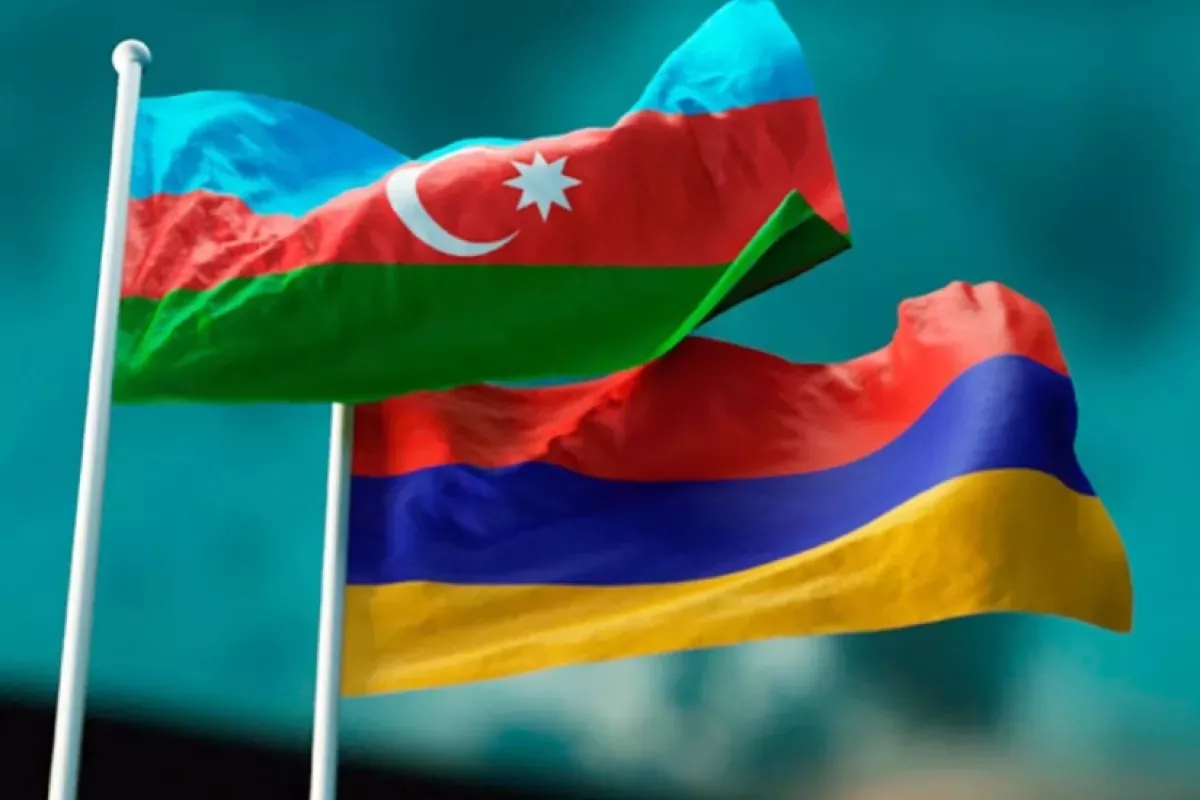
It is also telling how little noise accompanies these developments on the Azerbaijani side. Baku does not turn each such step into a propagandistic triumph, nor does it present the internet transit agreement as a concession to a defeated adversary. The tone is deliberately businesslike: the deal is signed, transit will be provided, and the geography of services will be expanded.
In this restraint lies the confidence of a side that knows time is working in its favour and does not need to assert its primacy through loud declarations. A peace built on Azerbaijani principles and implemented through Azerbaijani infrastructure speaks for itself.
The cable through which international internet traffic will soon reach Armenia via Azerbaijan is an invisible thing. It will not make front pages alongside summits and handshakes, nor will it feature in ceremonial broadcasts. Yet it is precisely these invisible lines, laid across land and seabed, that distinguish real peace from mere ceasefire.
A ceasefire is sustained by the absence of war; peace is sustained by the presence of connections. The agreement signed on June 22 has added another such connection — and likely not the last. In Washington, ministers initialled peace with their signatures; today, engineers and businesses are anchoring it on the ground, metre by metre of fibre optics.
Source: caliber.az









 scorpion.az