

Baku, September 14, AZERTAC
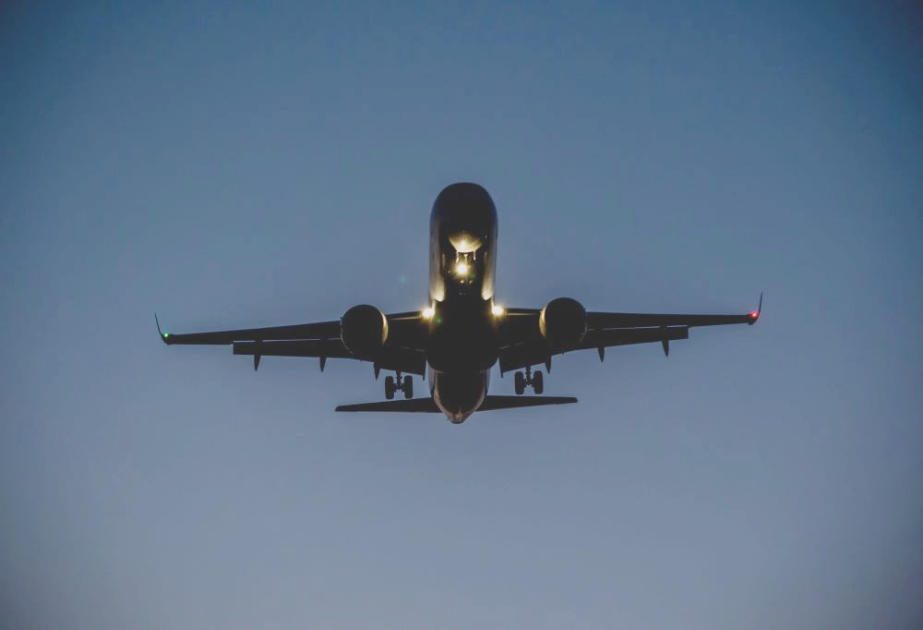
For most passengers, cosmic radiation during a flight is a minor part of everyday exposure, according to The Press Service of Israel (TPS-IL). But for pilots and flight attendants who spend hundreds of hours in the air each year, those differences can add up. New measurements over southern Israel are giving scientists a clearer picture of how radiation at flight altitudes changes with the activity of the Sun.
The study does not mean that passengers face a new radiation danger. Its significance is that it provides rare, direct measurements of cosmic radiation over the Middle East and shows that the radiation environment at flight altitude changes with the Sun’s activity. For aircrew who spend hundreds of hours in the air each year, a better understanding of those fluctuations could lead to more accurate assessments of long-term occupational exposure.
“The Sun actually protects us from some cosmic radiation. When solar activity decreases, that shielding weakens and more galactic cosmic rays can reach the Earth’s atmosphere,” the study’s author, Dr. Roy Yaniv explained to The Press Service of Israel.
Yaniv, of the Hebrew University of Jerusalem and the Sheba Medical Center, conducted the research with Prof. Yoav Yair of Reichman University and Prof. Colin Price of Tel Aviv University.
The findings are based on six high-altitude balloon launches carried out over southern Israel between 2014 and 2016. The balloons carried radiation detectors to altitudes of about 35 kilometers, allowing researchers to measure radiation from near the ground into the upper atmosphere, including altitudes reached by commercial aircraft.
The Sun’s Shield
The measurements showed an inverse relationship between solar activity and the radiation detected by the instruments, with a correlation of minus 0.71. In other words, radiation levels increased as solar activity declined.
The researchers caution, however, that the study included a limited number of observations, so the correlation should be considered indicative rather than statistically definitive.
Based on the relationship they measured, the researchers estimated that the radiation component detected by their instruments could be about 40% to 60% higher during solar-minimum conditions than during periods of maximum solar activity. But Yaniv stressed to TPS-IL that this is an extrapolation, not a direct measurement made during solar minimum.
For occasional passengers, there is no reason for alarm since the additional radiation from few flights per year is small compared with overall natural radiation exposure. For very frequent flyers and especially aircrew, cumulative exposure becomes more relevant. Radiation levels depend not only on the solar cycle, but also on flight altitude, latitude, route and duration. The longer and higher the flight, and at higher latitudes, the exposure will increase.
Yaniv added that the International Commission on Radiological Protection considers radiation exposure for most occasional passengers “negligible.”
The researchers also compared their balloon measurements with EXPACS/PARMA, a computer model used to estimate cosmic-ray radiation in Earth’s atmosphere. The measurements closely matched the model’s predictions for the electromagnetic component of the radiation.
The researchers’ next step is to measure more components of the radiation environment, particularly neutrons, and to collect observations during different phases of the solar cycle.
The study was published in the peer-reviewed Journal of Geophysical Research: Atmospheres.
Source: azertag.az





 scorpion.az