

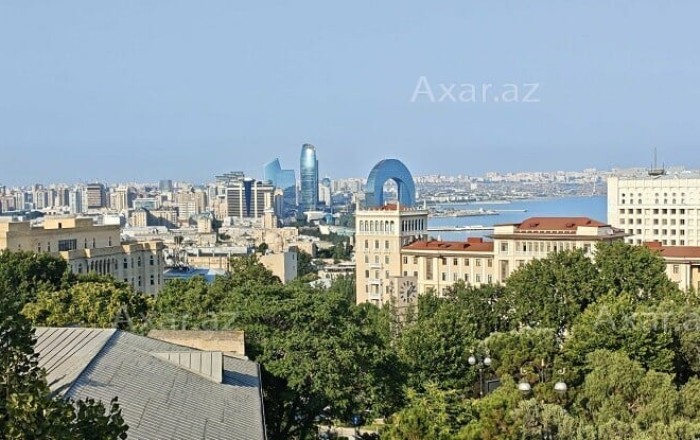
The program covering the main events of the 13th session of the World Urban Forum (WUF13), which will be held in Baku on May 17–22, has been presented to the public, the WUF13 Azerbaijan Operations Company told APA.
The program will bring together representatives of various stakeholders and like-minded groups within the framework of WUF13 to discuss one of the world’s most pressing challenges — housing provision.
The statement said that the WUF13 event, dedicated to the theme “Housing for All: Safe and Sustainable Cities and Human Settlements,” will gather national governments from different countries around the world, as well as communities, experts, and partners, to exchange ideas on solutions related to sustainable urban development, shape policy approaches, and accelerate action.
“The program creates opportunities for high-level discussions through practical and solution-oriented platforms, as well as interactive meeting formats, and ensures that global policy is grounded in local experience,” the statement noted.
More detailed information about each category and the full program of the WUF13 event are available at the following link: https://wuf.unhabitat.org/main-events
Dialogues: shaping the global housing agenda
High-level dialogues that define the direction of global discussions form the core of the WUF13 program. Within the framework of these dialogues, the relationship between housing provision, inclusivity, sustainability, and urban systems will be explored. In addition, each dialogue will address one key aspect of housing provision.
• Global housing crisis: What is the way out?
• Transformation of informal settlements and slums
• Housing provision in the recovery and reconstruction of post-crisis cities
• The link between climate and housing policy
• The social and economic impact of housing provision
• New approaches to financing housing provision
The purpose of these discussions is to connect global problems with practical solutions and joint commitments.
Special sessions: in-depth discussions on critical urban development issues
Special sessions will focus on topics such as climate adaptation, housing provision, informal settlements, urban renewal, digitalization, financing mechanisms, and inclusive urban development.
By creating a platform for more specific discussions, these sessions will showcase the experiences, partnerships, and innovative approaches of different regions.
These include housing provision at the center of global coalitions, the host country special session of WUF13, the pulse of healthy homes, affordable housing in Africa (a special session in the format of a compact deal room for investors), cities as playgrounds, cultural heritage and inclusive urban regeneration – a new perspective, from waste management to the circular economy, stories from the “front lines”: advancing urban climate heritage, inclusive urban resilience in small island developing states, the “blue” economy and sustainable tourism, and the special closing session of WUF13.
Assemblies: the power of collective voices
It was noted that Assemblies create special platforms for various like-minded groups to come together, express their views on their roles, and voice common priorities within the framework of the global urban agenda.
“Assemblies will bring together representatives of local and regional governments, grassroots and community-based organizations, as well as women, youth, business and industry sectors, including parliamentary representatives, to exchange views on key urban issues.
By promoting dialogue among these groups, the assemblies will contribute to ensuring that diverse opinions are reflected in the outcomes of the event and will strengthen collective advocacy for sustainable urban development.”
Roundtables: from dialogue to action
The Forum will also organize roundtables — action-oriented sessions bringing together partners and colleagues to exchange views on key urban issues.
In addition to serving as a platform for identifying common positions and exploring possible options to address emerging challenges, these discussions will present projects, initiatives, and scientific research activities that demonstrate the value of inclusivity and mutual learning on an equal basis.
The roundtables consist of 12 sessions dedicated to specific stakeholder groups or thematic areas: One UN, local and regional governments, business organizations, women, persons with disabilities, parliamentary representatives, academia, children and youth, professionals, grassroots and civil society organizations, indigenous peoples’ rights, and the rights of older persons.
Source: en.apa.az




 scorpion.az