

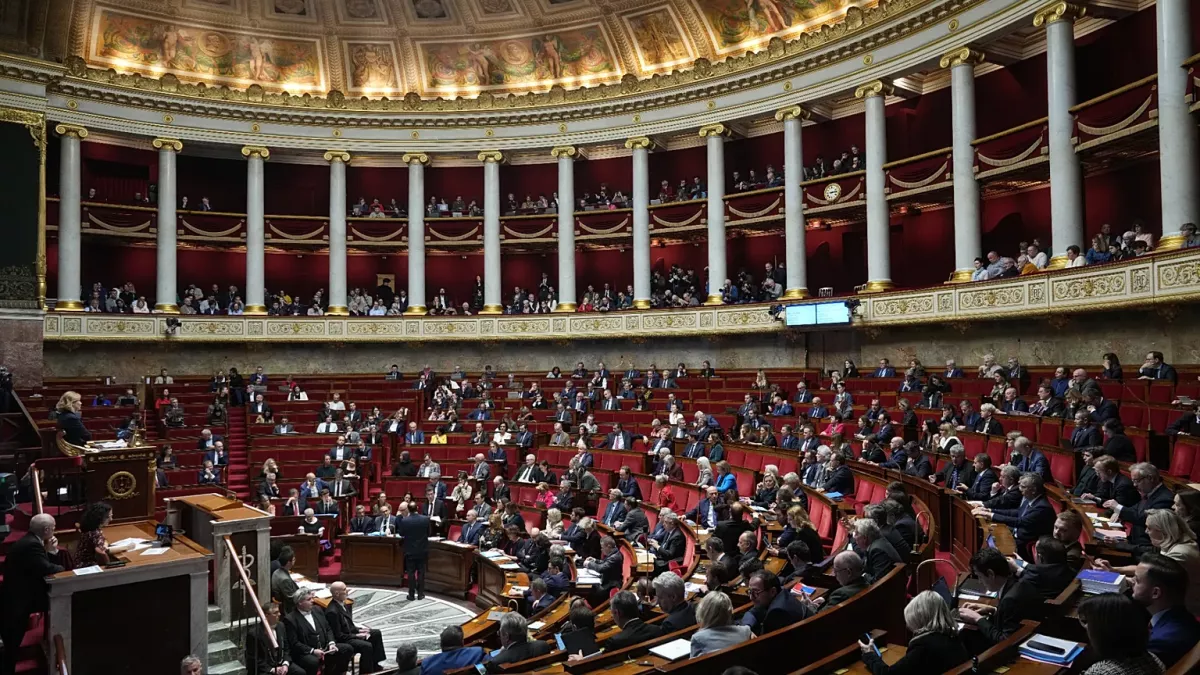
France's government plans to sharply restrain most public spending growth in 2027 as rising defence outlays and borrowing costs consume an increasing share of the budget, spending ceilings published on July 16 showed.
The ceilings set the stage for a potentially rocky parliamentary budget battle from October, as the government seeks to keep the deficit under control ahead of a 2027 presidential election that polls suggest could favour the far right, Reuters reports.
The Finance Ministry said spending by the state and government agencies would reach €708.4 billion ($812.2 billion) next year, with ministers instructed to keep most departmental spending growth below inflation.
The ministry projected debt interest costs would rise to €74.2 billion in 2027 from €64.8 billion in 2026, while defence spending would increase by €6.4 billion in line with France's military programming law.
Excluding defence, ministerial budgets would rise by just €1.5 billion overall, the ministry said, underscoring the government's effort to rein in spending as it seeks to restore public finances after a 2025 deficit of 5.1% of GDP and debt equivalent to 115.9% of economic output.
"This represents a considerable effort for the government," budget minister David Amiel said on franceinfo radio. "If we do nothing, the deficit will spiral out of control in 2027."
In addition to the defence hike, spending on the environment, education, security and justice gets slight increases. The spending on employment policies faces a cut of €2.8 billion and development aid spending is also set to decline.
The ministry also signalled that local authorities will be asked to contribute to the budget squeeze before the draft bill is submitted to parliament in early October.
Social security spending remains the biggest pressure point. The government projects it will rise by €17 billion to €838.3 billion in 2027, growing faster than inflation despite planned savings measures, highlighting how healthcare and pension costs continue to drive overall public spending.
By Vafa Guliyeva
Source: caliber.az








 scorpion.az